Showing posts with label Container Gardening. Show all posts

Monday, October 21, 2019

Pallet Boxes Second Crop

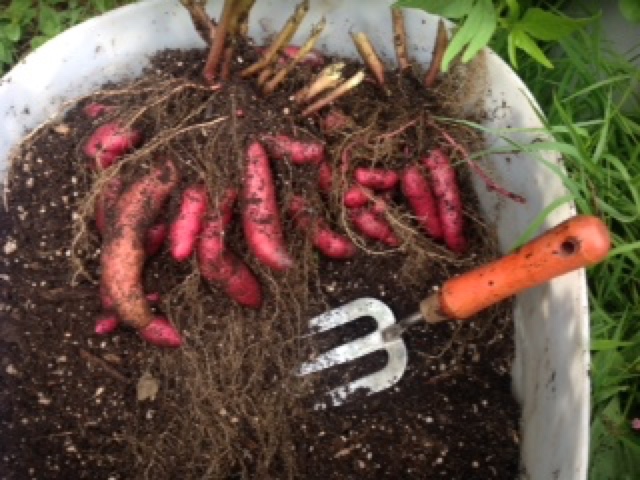
Right now I'm growing my second crop in succession in the new pallet boxes. As you recall, crop number one was potatoes. After I harvested all the taters, I wanted to grow a second crop. So I opted for green beans. So without adding anything new to the boxes, I sowed seeds.

Over time I've learned that I can reliably get two crops in a row out of a box without having to add more fresh compost. So far I've only tried using beans as my second crop, but I bet a variety of greens (chard, beets, bok choy) or peas would work just fine too. 

Beans - Royal Burgundy

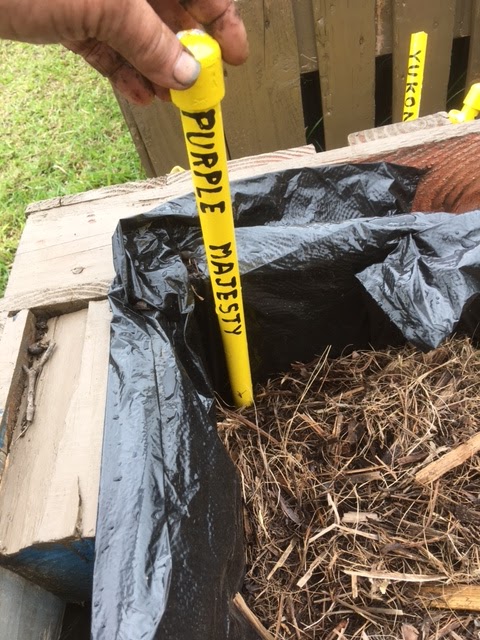
After the first crop is harvested, the material in the box has decomposed to about half way. That is, the full box when I started out is now only half full. By the time I harvest the second crop, the beans, the soil level is down lower, with the box being filled only 1/3. By this time I need to add more fill. So I'll add compost, till it up a bit, getting the box filled about 2/3. Then add more compost on top before planting in order to bring the soil level up closer to full. 

Beans -- Red Swan

Sometimes instead of adding compost, I'll empty the box out, moving the soil to top off an adjacent box. Then I'll start out fresh again with the empty box. I'll mark the date on the box so that I can keep track of how I'm rotating the boxes. I figure that this way the soil won't get "worn out" because it's constantly being refreshed or started over. 

This all may sound complicated, but it's not. Really. Just keep incorporating fresh compost and I can't go wrong. 

Monday, June 10, 2019

Pallet Boxes for Potatoes

I've been making more boxes as I have the wood pallets available. Along one side of the sheep paddocks is an area with only an inch or so of soil. The only thing that will grow is tropical grasses, and even they have a hard time making roots. Thus they grow in a mat that can actually be pulled up like a sheet in places right off of the pahoehoe lava beneath. It's really weird. It's like having a grass carpet. 

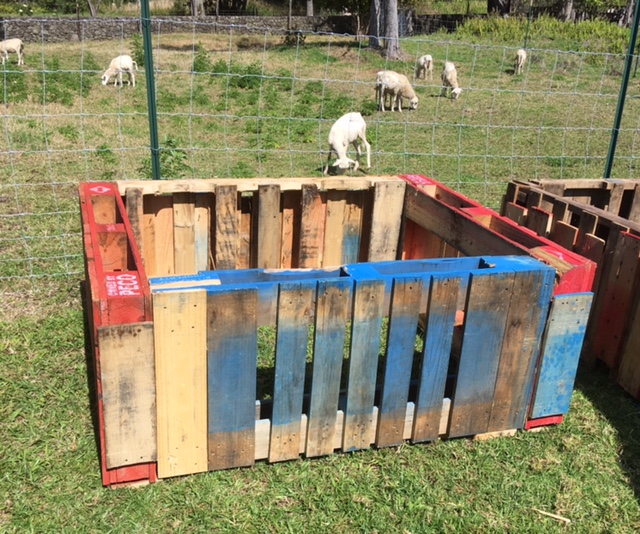
This is the area I'm building more pallet grow boxes. It's a method whereas I can grow food. So far I have 10 boxes made, filled, and planted with potatoes. 


Here's a quick description of how I make these....
... I cut the pallets in half retaining both cross pieces for stability, then screw four together into a box. I'll use pieces from the discarded section to fill in any big gaps on the sides of each box. 


... To make them more visually pleasing, I paint the sides. 


... Next I place cardboard on the bottom to help keep the grass farm growing up through the soil. Then I line the sides of the box with some air resistant material. Currently I'm using black plastic trash bags. 


Several layers of cardboard on the bottom. Then I use a staplegun to Lin the sides with plastic trash bags. 

... Then the boxes get filled with my homemade compost. After watering and settling for a couple days, I'll plant them. 


Coarse compost fills most of the box, then compost is used to top it off and plant into. 

After planting, don't forget the label. 
These boxes are made very much like my compost bins. But they don't have a side that is removable. And they are only half as high. I find the height to be very ergonomic. Just right for an old buggah like me. 

Once this row of boxes is completed I plan to make more for other areas where there is little or no soil. I might grow more potatoes, or I might try something else. Time will tell. 

Two months after planting, the potatoes look great. 

Wednesday, April 10, 2019

More Container Gardening

Now that I'm getting over my illness, I'm eager to garden. Before getting sick I had gotten Matt's place tilled up and ready for growing. Matt planted beans, sweet potatoes, and pumpkins. Now it's my turn on my own land.

The first thing I opted to do was create some grow boxes. I have some specific crops in mind to grow in them. Grow boxes......aka container gardening...... work well from growing something atop lava rock.
Taro starts planted in the first box. 
I make my boxes out of pallets. I line them with old plastic bags then fill them with compost. The bags help extend the life of the pallet wood, but more importantly they help retain moisture in the box. Containers tend to dry out quickly in the tropical wind and sun, and the plastic liner helps prevent that. As for the compost fill, I happen to make that myself. I not blessed to have several cubic yards of garden soil just laying around, so I resort to homemade compost. In making my current new boxes, I'll be emptying all my 12 compost bins. Looks like I'll be busy refilling them after this project is built! 

Boxes ready for painting, lining, and filling. 
These boxes go together quickly. I cut down the pallets in half. Nail 4 together to make a box. If the spacing between the wood slats is greater than 1 inch, then I cover it up with a piece of pallet wood. If an inch or less, I don't bother. Using a staple gun, I tack the black garbage bags to the inside of the box, generously overlapping the bags. Before adding the compost I put a couple layers of cardboard in the bottom to help prevent the tropical grasses from growing right up through the deep compost. Next, in goes the compost. The coarsest stuff goes in the bottom, the finer stuff on top. Now it's ready to plant. Oh yes, I'll be painting the outside of the boxes in order to make them visually more pleasing.

Wednesday, March 28, 2018

Grow Box Update

Here's an update on the newest grow boxes. 3 are now full and planted. Boxes 1 & 2 are planted with yacon. The third box has potatoes, a variety that I'm growing for seed production. It's a new one for me called Adirondack Blue. 


The photo below shows the potatoes. The soil surface has settled down about a foot. By the time the potatoes are ready to harvest, I expect it to sink down another foot. It's to be expected as the fill material composts down. 


The fourth box is now full and I plant to plant potatoes in that one too. The fifth box is half way full. So it looks like I'm ready to build a few more boxes. 

So why am I using boxes in this spot? Because my sheep periodically graze the grass in this area. I wouldn't be able to grow any food for myself without the sheep either eating it or trampling it. The boxes are built atop lava rock where the grass sparsely grows. Thus the spot wasn't even productive for growing sheep food. But the boxes change all that. I can grow food for myself without the sheep being able to reach it. Yes, the sheep leave the boxes alone. Now the goats and donkey are a different story. They'd reach up and eat everything they could. It never dawns on the sheep to do that. Yes, I keep the goats and donkey away from the grow boxes. 

Wednesday, February 7, 2018

Pallet Grow Box Upgrade

Yeah, I'm always trying something a little new. Just tweeting my ideas to see if I find some slightly better way of doing it. Perhaps making something easier, quicker, sturdier, cheaper, etc. 

Sooooo, this week I made a new section of pallet boxes. These will be for the yacon. I cobbled together 5 in arow, nailing the back 3 pallets together using a piece of 2"x4" as the nailing brace. The door was left unnailed so that I can easily open the boxes for harvesting, emptying, etc. 

I'm trying a slight modification on attaching the door. Not much of a change, but it was easy to make. Now I'll see if it turns out to be just as serviceable. 


I used to wire all four pallets together so that they could be easily individually replaced. I'm finding that all 3 side & back pallets tend to rot out at the same rate. Because the rot rate is uniform, I'm now simply nailing the back 3 pallets together for stability reasons. Assembly is far simpler and quicker this way. 

Depending upon what the pallet boxes are being used for, they are lasting 2 to 4 years. I could patch them to make them last longer, but I have easy, free access to replacements. So is simpler to scrap the rotting ones (cut up for firewood or add them to a hugelpit) and plop in a replacement. 

Wednesday, December 20, 2017

Old Cooler Container Gardening

"P" emailed to ask, "Do you use the coolers in the greenhouse, or only outdoors?" So far I'm only using them in the mini greenhouses, but there's no reason that they can't be used outdoors. In fact, one blog follower is a big user of coolers for her outdoor gardens. They are old picnic coolers, both the styrofoam ones and the hard plastic ones. The insulated sides help protect the plant roots from getting too hot. Plus it helps prevent the soil from drying out over rapidly. 

I'm a collector of old coolers. The trash dump thrift store keeps an eye out for them, but I've discovered that I have competition for them. Guess somebody around here got the same idea or read my blog about it. But I do manage to snag a few more each month. They can be broken, worn out, missing lids, I don't care. Punch a few drainage holes in the bottom, fill them with potting soil mix, and they are ready to go. 


I use them to grow "eaten raw" veggies in the mini greenhouses. Lettuces. Kale. Asian greens. Any other thing used for mixed salads. I'm also growing carrots in them because my garden soil is too stony for them. 


I don't have nearly enough yet for my needs. So I also use sturdy cardboard boxes that I line with a heavy duty trash bag. The black box in the middle (photo above) is a cardboard box that bananas were shipped in. So far I have 11 old coolers in service. 

Monday, August 14, 2017

Container Beans by "L"

Gardening on one's lanai (aka- porch) is catching on. Super! Glad to see that some people are discovering that they don't have black thumbs afterall, and that growing fresh veggies can be fairly fun and easy. Oh, not that they are growing all their own food, but those few weekly additions of freshly picked veggies that you grew yourself can make all the difference in enjoying not only eating, but one's general happiness overall. There's just something innately satisfying in eating something grown or foraged yourself. 


Garden containers don't have to be expensive or fancy. Yes, I've seen some pretty spiffy & pricy container gardens, but cobbled together containers out of recycled materials work just as fine. As in the photo above, "L" is successfully growing green beans in a low cost homemade table top garden. Yes, it works! "L" claims to be one of those "black thumb" people, but her little container gardens are proving otherwise. I give "L" a hearty applause!!! 

On my farm I use a variety of gardening methods, including container gardening. I simply do what works for me in a particular situation. I'm not a diehard follower of just one gardening method. But when it comes to container gardening, I give it a strong thumbs up. Plus I'm big on making containers via recycling/repurposing. Besides being effective and economical, it's down right fun! 

Wednesday, August 9, 2017

Lettuce in Pots

Speaking of container gardening, here's a photo of "L" growing lettuce on her patio table. What a super idea! Around here gardeners are switching away from growing lettuce in the ground where it can easily be contaminated with slugs. 


One of the benefits of this system is that the pots and table can be moved as needed. Another plus is that the plants are at an easy level to access. No bending over. The back appreciates that! 

Tuesday, August 8, 2017

Beans in an Old Cooler

"S" sent me an email that I thought would be great to pass along. 
|
-------------->

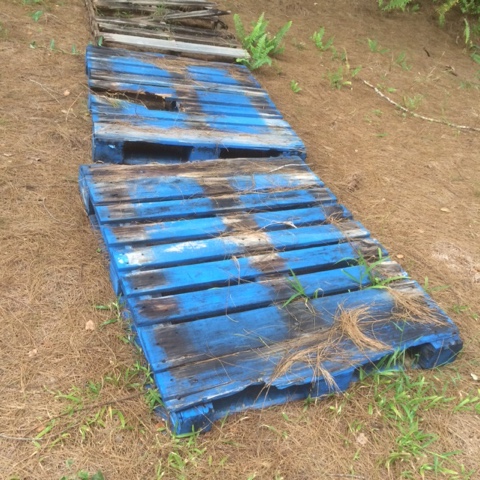
"Isn't this lovely?  One Old-dead-cooler full of purple green beans, about eight plants, plenty enough for a household of one.  Have another container going with the same beans about three/four weeks younger....I have noticed that reliably continuous production in the home garden quickly leads to culinary burn-out, so I'm trying to space things out a bit further..."

______________________________________________________

I agree with "S" that familiarity breeds boredom. A continuous supply of a particular food item tends to result in the ho-hum syndrome. No matter how cute and tasty they were the first couple of weeks, by the fourth week they don't seem so appealing anymore. Culinary burnout is a nice way of saying it. 

By the way, "S" grows things in coolers because she lives on lava where it's impossible to dig a hole. The beauty of using coolers are two fold -- they keep the plant roots cooler so that they don't sun bake, plus they can be easily moved to a different location to follow either the sun or the shade, whichever the plant prefers. Great idea and solution! 

Monday, February 27, 2017

Dead Coolers

Way back on Nov 26, 2015 I posted a blog entry about a person here that lives on lava land, but still successfully gardens. She's been using half barrels and plenty of old, dead coolers salvaged from the dump. She just sent me some new photos of her efforts and I want to share them. 


She makes her own  "soil" Old Hawaiian style, by taking the old "soil", layering in organic material (weeds basically), then planting a new crop. By mulching the top, she keeps the plant roots moist and cool. Ya know, it works! 


She's solved another problem by using salvaged metal grates...........cats using the soft soil for a catbox. The crops will grow up through the grate with no problem, and the cats are aghast to find themselves thwarted, actually cheated, out of a good place to poo. I plan to help her out by watching for grates at the dump. Or perhaps some other kind of firm mesh, be it plastic or metal. I like her solution a lot. Cool! 

Wednesday, November 16, 2016

Harvesting My Compost/Soil

Compost/soil? That's the term I use to describe the material that comes out of one of my pallet grow boxes. It isn't compost, because there's quite a bit of soil and sand in the mix. And it's not soil either because the vast majority of it is based upon decomposing organic material, also known as compost. 

Each pallet box is used to grow crops for about 8 to 12 months before I open the box to harvest its contents. This translates into two back-to-back short season crops (beans, potatoes, etc) or one long season crop (turmeric, taro, yacon, etc). 

Typically a pallet box is half full when I harvest the compost/soil. The material has decomposed that much over time.
Above is the most recent box I've opened, and it is half full, as anticipated. 


While I could simply fork the material into a wheelbarrow and cart it to the nearest garden bed in need, I prefer to sift out the coarser chunks. This makes my life easier when running the rototiller in the garden. Usually I use a wheelbarrow to catch the sifted compost/soil, but in the above photo I'm using a 5 gallon bucket. Don't ask me for a logical reason. It's seemed ok at the time.  But really, it would have been far better to use either the wheelbarrow or the cart behind the ATV. Geez, I sifted the entire pallet boxful before I thought to use the ATV wagon. Poor decision on my part. Hopefully I've learned my lesson enough to remember for next time. 


Anyway......here's a close up view of the coarse stuff that the sifter takes out. 


I usually get one trashcanful, or a bit more, of coarse stuff. 


Above me you can see just how coarse it is. Even though this isn't going right into my garden beds, it isn't going to waste either. No way! (does that surprise anyone? 😉 ) I will layer this stuff into the pallet box along with all the fresh organic material I will be using to refill the box. Perhaps in another 8 months or so it will be decomposed enough to make it through the next sifting session. 


Tuesday, September 27, 2016

Potatoes in Containers

I received an email from a blog follower living not too far from me. Living on lava with virtually no soil, she has been experimenting with growing things in containers -- old coolers, plastic half barrels, etc. She's been making her own growing medium by filling the containers with compost/soil made from assorted biomass from around her property....primarily weeds mixed with some spent potting soil. And you know something ----- she has been very successful growing beans, peas, gourds, and now, potatoes. 

Here's the photos she sent of her latest potato harvest:  

The foliage turning color. From healthy green to bronze/yellow.......
The plants are signaling that they have matured. Here in Hawaii, that means that it's time to harvest. 

The tops of the plants have been cut off and removed, exposing the top layer of mulch......

With the mulch removed, the tips of the tubers can now been seen. This variety is a long fingerling type, and amazingly it likes to grow its tubers vertically! So just the tips poke up.......

The plants have been pulled up, exposing the long tubers.......

And here is the harvest from her three plants grown for 3 1/2 months in containers......

Quite the beautiful harvest. Way to go, girl!!!! Congratulations. 


Monday, August 29, 2016

Filling a Pallet Grow Box

By far the most time consuming part of pallet grow boxes is the filling process. It takes a heck of a lot of biomass to fill one. A box holds one cubic yard of material, which will translate into 27-30 trashcanfuls when tromped down and decomposing. 


As I work around the farm, I always save whatever biomass I gather, be it clearing leaves and twigs out of a spot, pulling weeds, or removing an old crop. I store this debris in recycled plastic bags, or feed bags, leaky trashcans, whatever. Sometimes I'll just pile it up, like in the case of the coarse ferns that I'm removing. 


I'm not too fussy in what I use. Hacked stems from ginger, coarse ferns, tree leaves, weeds. The only things I avoid are those that I've found to be aggressive spreaders and difficult to kill -- honohono grass, Mexican elderberry, and Bermuda grass. Most everything else dies during the decomposing period. 


I don't bother to chop the stuff up. I leave it coarse......except for the fresh grass clippings (which by their very nature are finely chopped) that I add for nitrogen. I'll even use chunks of banana trunks. They eventually decompose just fine. 


All the stuff in these photos went into the new box. I layered the various ingredients, adding 1"-2" fresh grass clippings or a little horse manure every foot or so for a nitrogen boast due to high amount of carbonous material I'm using, plus a shovelful of either garden soil or compost atop the grass or manure layer. (If the weeds I used had been pulled up with their roots and a bit of soil with them, I can skip this last step.) Since all the material was already wet due to the rain, I didn't need to wet the layers as I added them. If this were a dry spell, then I would wet down the layers. I'd fill the box a few feet deep then climb inside and tromp it down real good. I find that the sides and the corners often need extra fill. 

Today I packed the box full to the top. Packed it down as good as I could. Next I watered it with a bit of extra water (a 5 gallon bucket). 

Once a week or so I will go back and tromp the material down again. I'll also check to see if it's getting warm deep down inside. The goal is to not let the pile dry out if it gets real hot because the decomposition process will stop. To combat that problem I will add water as needed. And I'll cover the top of the pile with either an old tarp or some sheets of cardboard that I have wetted down. That helps keep the moisture in. 

Now for the next few weeks there will be a cycle.....
.....tromp down the pile, top off the box with more biomass, water as needed. 

Exactly what I put into these pallet boxes is highly viable. It all depends upon what's around. Lots of outdoor biomass from the farm. Kitchen waste. Livestock manure (not pig, dog, or cat, which is reserved for the hot compost piles.) Slaughter waste. Roadkill. Foraged waste fruits. Coffee grounds. By far the majority of the material is weeds, plant trimmings, grass clippings, and tree leaves. 

Yes, it's like a hot compost pile. It differs from my hot compost piles in that the hot compost :
1- processes the pig, dog, and cat manures
2- gets urine inoculated biochar added to the layers 
3- is temperature monitored
4- is turned in order to maintain high composting temperature for a total of 30 days

The pallet box material is never turned. It is layered as it is filled. At the end of a long season crop, or after two consecutive short season crops, the box is then opened and emptied. Then we start all over again. 

Sunday, August 28, 2016

Making a Pallet Grow Box

Recently I've been running into more and more people who are trying to use old pallets for making compost bins and container gardens. I've been using them quite successfully for years now and over time have worked out a fairly simple way of making them, a method that works for me. 

I take four pallets that are in fair to good condition. If they are free, I'm not too fussy. 99% of my pallets have been free if I haul them away myself. Perfect price! 

The above pallets are in fair condition in need of bit of repair. A few well placed nails fixed most of the problems, but one had a bit of a hole. 


Holes like this one I can patch. A piece of something stiff, nailed into place, makes an adequate patch. In this case, I used an old political campaign sign........thanks Brad, for donating your old signs. I've found plenty of uses for them, 


Next step......apply a liner. Experience has shown me that the boxes need to be lined in order to hold the moisture in. Otherwise they dry out regardless of how much rain I get. I initially tried using cardboard, but it didn't work good enough. I've since switched to using something more moisture impervious, like old feed bags, old tarps, or recycled black trash bags.  


I fasten the liner, in this case black trash bags, with nails through a milk jug top. The top acts to keep the plastic from pulling through the nail. 


Once all four pallets are lined, then it's time to put them together into a four sided box. In the beginning, I nailed the boxes together. Before long I realized that it wasn't the best idea. They were sturdy, but they could not be opened easily or taken apart simply. So I tried other methods. I finally settled upon using wire or sturdy twine nailed to the corners. In the photo above, I'm using some old electric fence tape. At each end I made a knot and nailed through the knot into the wood pallet. Then I used other nails to stretch the tape as needed to make it a tightly fitting corner. 

At the end of a growing season, I often open the box to collect the compost/soil to use elsewhere. Sometimes I need to move the entire box to a new location. Other times I need to replace one of the rotting pallets with a better one. Being able to quickly dismantle a box and put it back together is important to me, thus the odd way I put the pallets together. It's simple, quick, cheap, and effective. 


Above is the new box put together and ready for filling. It only took a few minutes.


 Now comes the more time consuming task of filling it with organic debris. 


Thursday, November 26, 2015

Container Gardening on Lava Land

Living on a lava rock island, I hear plenty of people whining that they can't grow vegetables because they have no soil. Sorry, but no sympathy from me. Zero! I've had good success using my pallet grow boxes. But on their down side, they require a lot of organic material to fill them. But don't dispair. A friend of mine is proving that you can grow successfully in smaller containers. 


I was just up at my friend's house, and was taken on a tour of her garden. She's been quite creative....and successful. 


She proves that you don't need to go out and buy expensive bags of topsoil. Nor do you need to spend money for containers. Dead coolers and discarded plastic barrels cut in half work just fine. 


Right now she has peas, potatoes, and gourds. She's had success with radishes in the past. In her area she could do well with most cool season crops. 


One thing that I noticed that is an advantage with containers is that you can position them in spots according to the sun. Full sun. Part sun. Morning sun, afternoon shade. That sort of thing. This gives much more flexibility in gardening efforts. 


This friend is a master gourd grower. She grows amazing gourds even though her land is basically just lava with a thin layer of duff. It's all due to container gardening. 


She started out with just a thrown away cooler. Every year she recycles the soil that she's created by adding more organic stuff -- weeds, grass, and pulled up plants. The coarse stuff, such as coconut husks and such, go into the bottom of the containers, with the finer stuff atop that. I see that she has been increasing the number of containers as time goes by. Great!